Learning in the Classroom
PSYCH 209 was the first course in which I actively translated classroom training into research skills that would shape my future academic development. Through coursework on hypothesis testing, experimental design, ethics, and scientific writing, I learned how research questions are framed, evaluated, and communicated responsibly.
To become a more competitive applicant for UW research labs, I extended my training beyond the classroom by spending a summer working in multiple laboratories in China. Using that time to build methodological foundations helped me translate what I learned in PSYCH 209 into practical research skills and prepared me to engage more meaningfully in research environments upon returning to UW.
From learning models to asking my own questions

Building a foundation in research thinking
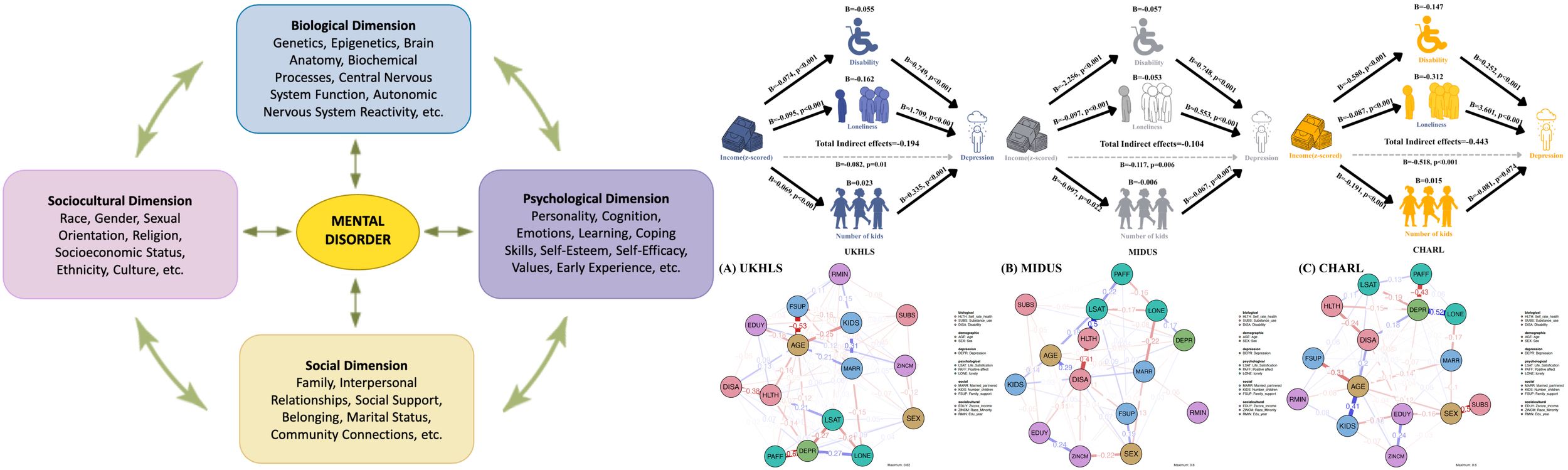
In PSYCH 305, I was introduced to Sue’s Multipath Model, which frames mental health development as the combined influence of biological, psychological, social, and sociocultural dimensions. While the course emphasized how these dimensions jointly contribute to mental health, it prompted a question for me: if certain pathways contribute more strongly to specific conditions, could interventions be more precisely targeted?
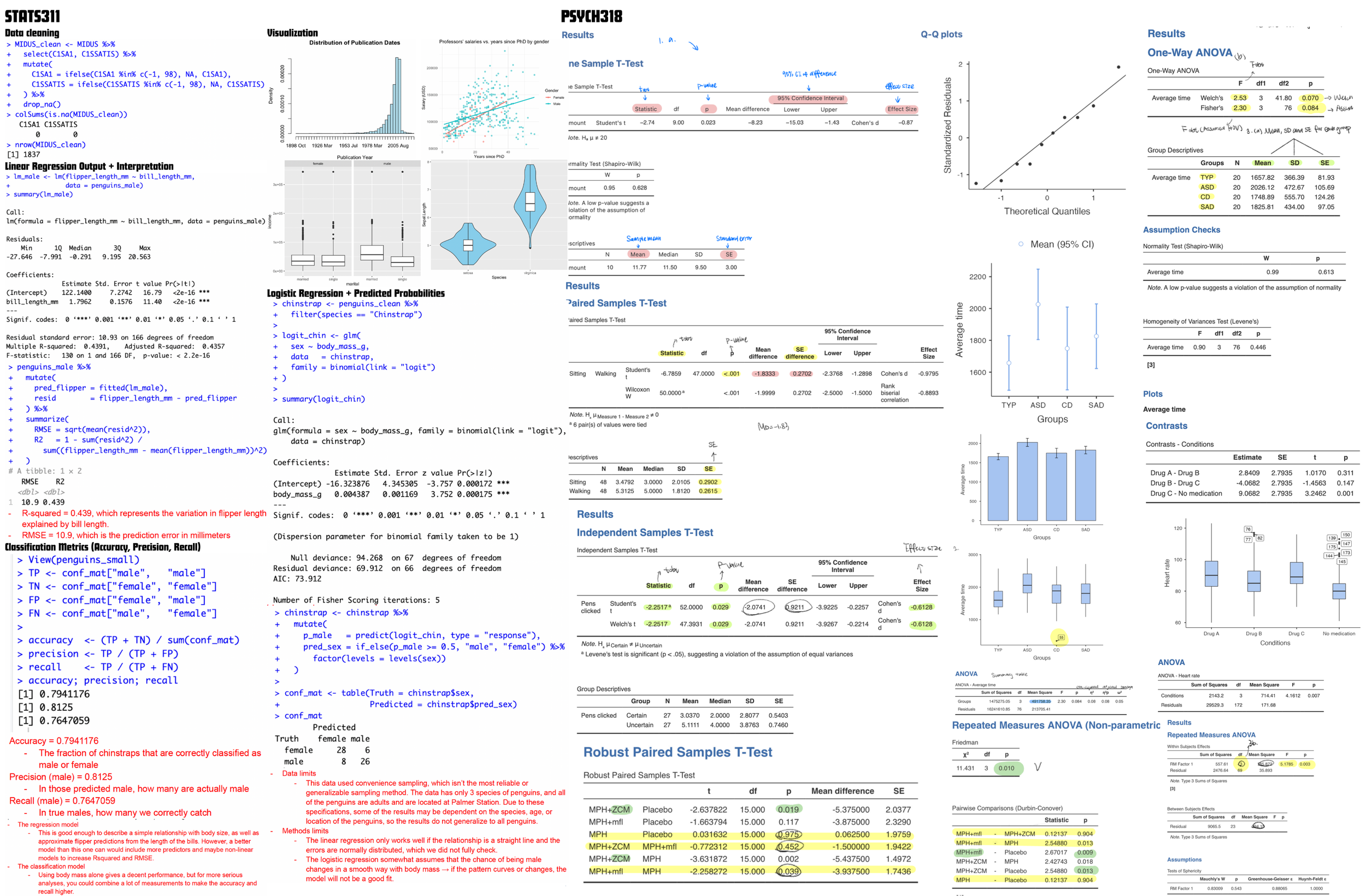
Courses such as PSYCH 317 and 318 deepened my understanding of statistical reasoning, while STAT 311 strengthened my ability to use R for data visualization and analysis. As these skills came together, I began to move from applying existing models to questioning how they could be tested and refined.
This question became central to my independent study, where I found that loneliness functioned as a key pathway through which low income was associated with greater depressive symptoms.
Connecting health psychology to health disparities
Courses in health psychology and health disparities gave language and structure to patterns I was beginning to observe through research. Learning how socioeconomic conditions, social support, and stress shape mental health helped me situate individual experiences within broader structural contexts. Examining loneliness as a mediating pathway allowed me to better understand why low-income populations experience higher levels of depressive symptoms, reinforcing my interest in health disparities as both measurable patterns and lived realities. Rather than remaining abstract, classroom concepts became tools for asking clearer questions about how mental health inequities emerge and persist.